
How Much Does Septic Tank Pumping Cost?
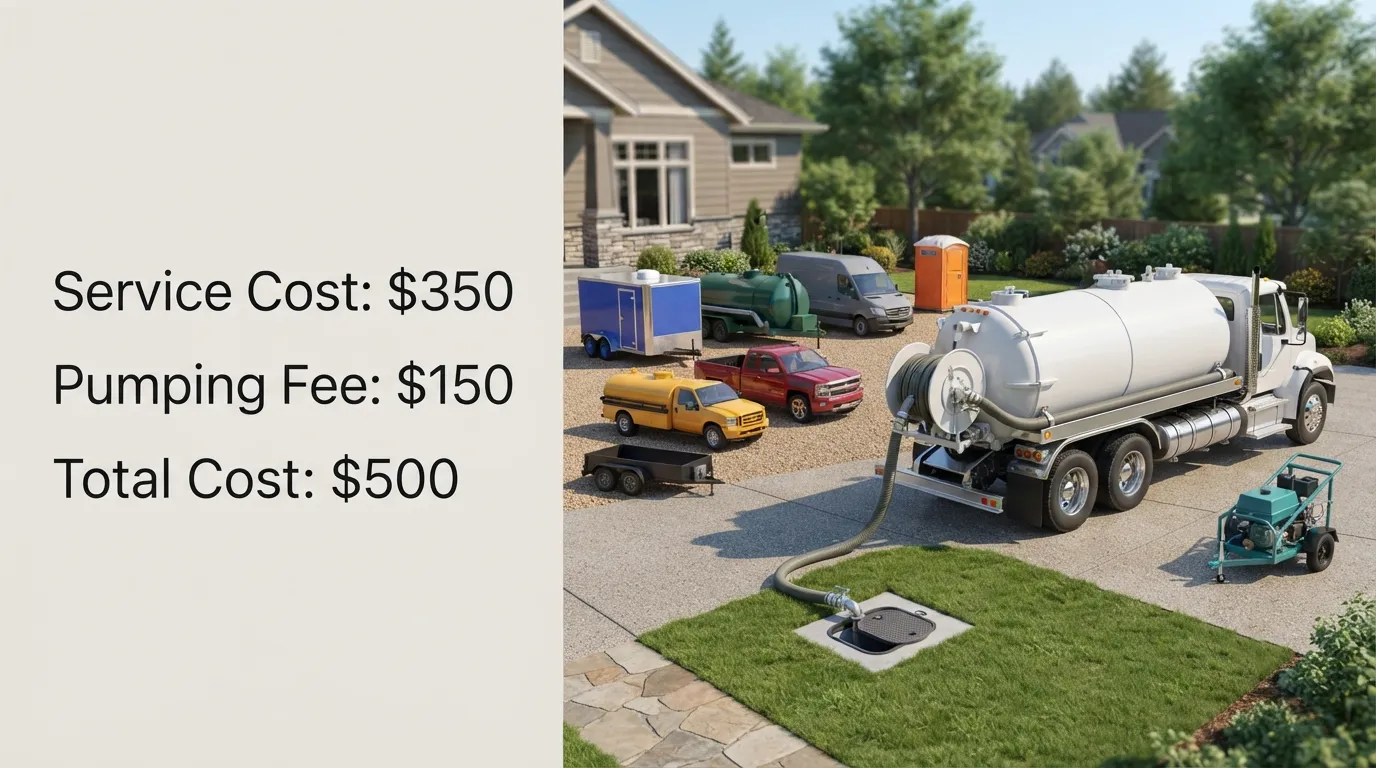
The honest answer: it depends on tank size, how long since the last cleaning, and how easy the tank is to reach. Lee's Summit Porta Pros prices standard septic pumping calls between 150 and 300 dollars on a weekday, and that band covers most residential 1,000 gallon tanks with normal access. Weekend calls run separately, from 50 to 150 dollars, since crews are working outside the normal schedule. A tank that has gone longer than the usual 3 to 5 year window, or one buried under a deck, costs more to service than a tank pumped on schedule with a clear lid. If your property sits closer to Blue Springs, about 11.2 miles northeast, or Raymore, 13.5 miles southwest, travel time can factor into scheduling but not into the base price band. For a full breakdown of what drives the number up or down, see septic tank pumping cost details on tank size and access, or check how often to pump a septic tank for your household size.
What Affects Septic Tank Cleaning Prices?
Four things move the number: tank size, sludge depth, access, and timing. A 1,000 gallon residential tank is the most common size we see across Lee's Summit, and pumping interval is typically every 3 to 5 years depending on household size and tank capacity. If your last pump-out was well past that window, expect more solids and a longer job. Grease interceptors follow a different rule entirely: those get pumped once fats, oils, grease and solids reach 25 percent of the liquid depth, which is a separate service from residential septic work. See grease trap pumping if that is what you actually need. Access matters too. A tank with an exposed riser costs less to service than one buried two feet down under landscaping. Weekend and after hours calls carry a premium over a standard weekday appointment. If you are unsure which category your property falls into, septic tank cleaning covers the difference between a routine pump and full cleaning, and septic tank warning signs will tell you if you are overdue.
| service | duration | low | typical | high |
|---|---|---|---|---|
| septic pumping | day | 150 | 250 | 300 |
| septic pumping | weekend | 50 | 100 | 150 |
Why Does a 1,000 Gallon Septic Tank Cost More to Pump Some Years Than Others?
The tank size doesn't change. What changes is how much has built up inside it. A household that skips its 3 to 5 year interval and stretches to seven or eight years between pump-outs will have thicker sludge and more solids for the crew to break down and remove, which takes longer on site. Weather plays a role too. Frozen ground in winter can make risers harder to locate and access, which is worth planning around; see porta potty in winter for how cold weather affects service scheduling generally, even though that page covers restrooms rather than tanks. Homes near Raytown, 7.5 miles northwest of Lee's Summit, and homes further out near Grandview, 12.7 miles west, see the same pricing structure. Distance from our base doesn't change the service price band itself. If your tank has never been pumped, or you don't know when it last was, that first call is the one to budget the higher end of the range for, since first-time cleanings often uncover more than routine maintenance visits do.
Do I Need a Permit to Pump My Septic Tank in Lee's Summit?
Permit and code questions for septic work vary by property and by whether the system is being repaired or just serviced. We have not verified specific Lee's Summit ordinance numbers for routine pumping, so the safest step is confirming directly with the city before assuming a permit is or isn't required. That is different from portable toilet placement rules, which are their own separate question. See porta potty permit requirements and dumpster permit requirements for those specific categories. For septic pumping itself, a standard maintenance pump-out on an existing residential tank usually does not trigger the same paperwork as a new system install or a tank replacement, but confirm that with the city before your appointment if you're unsure. If your situation involves a holding tank rather than a traditional septic system, holding tank rental covers a different setup entirely with different rules.
Should I Wait or Call Now for Septic Tank Pumping?
If it has been more than 5 years, don't wait. Slow drains, gurgling pipes, or standing water near the tank area are signs the system is past due, and small problems caught early cost far less than a backup does. Lee's Summit Porta Pros handles both routine service and same-week scheduling when a tank is showing warning signs. For agricultural properties or larger operations, farm and agricultural restrooms and OSHA portable toilet requirements cover related sanitation needs beyond the tank itself. If you're dealing with an active emergency, like sewage backing up into the house, emergency septic service is the faster path than a standard scheduled call. Otherwise, booking ahead during a normal week keeps you in the standard day-rate band rather than the weekend premium, and gives the crew time to plan around access at your property.
How much does septic tank pumping cost for a typical home?
A standard weekday pump-out for a residential tank runs 150 to 300 dollars in Lee's Summit. Weekend service is priced separately, from 50 to 150 dollars. The final number depends on tank size, access, and how long it has been since the last cleaning.
How often should a 1,000 gallon septic tank be pumped?
Every 3 to 5 years is the typical interval, driven by tank size and household size. Larger households or smaller tanks may need more frequent service. If you're unsure when yours was last pumped, that is worth checking before symptoms show up.
What is included in a septic tank cleaning price?
A standard cleaning covers locating the tank, pumping out solids and liquid, and a basic check of tank condition. It does not automatically include repairs, riser installation, or grease interceptor service, which are priced and scheduled separately.
Is septic pumping different from grease trap pumping?
Yes. Grease interceptors get serviced once fats, oils, grease and solids reach 25 percent of liquid depth, which is a different trigger than a home septic schedule. Residential tanks follow the 3 to 5 year interval instead.
Do I need a permit for routine septic tank pumping in Lee's Summit?
That has not been verified against specific city code, so confirm directly with Lee's Summit before your appointment. Permit needs can differ for repairs or new installs versus a standard maintenance pump-out on an existing tank.
Next step
Get a delivery date
Tell us the address, the dates and the headcount. We size the order and confirm the route.